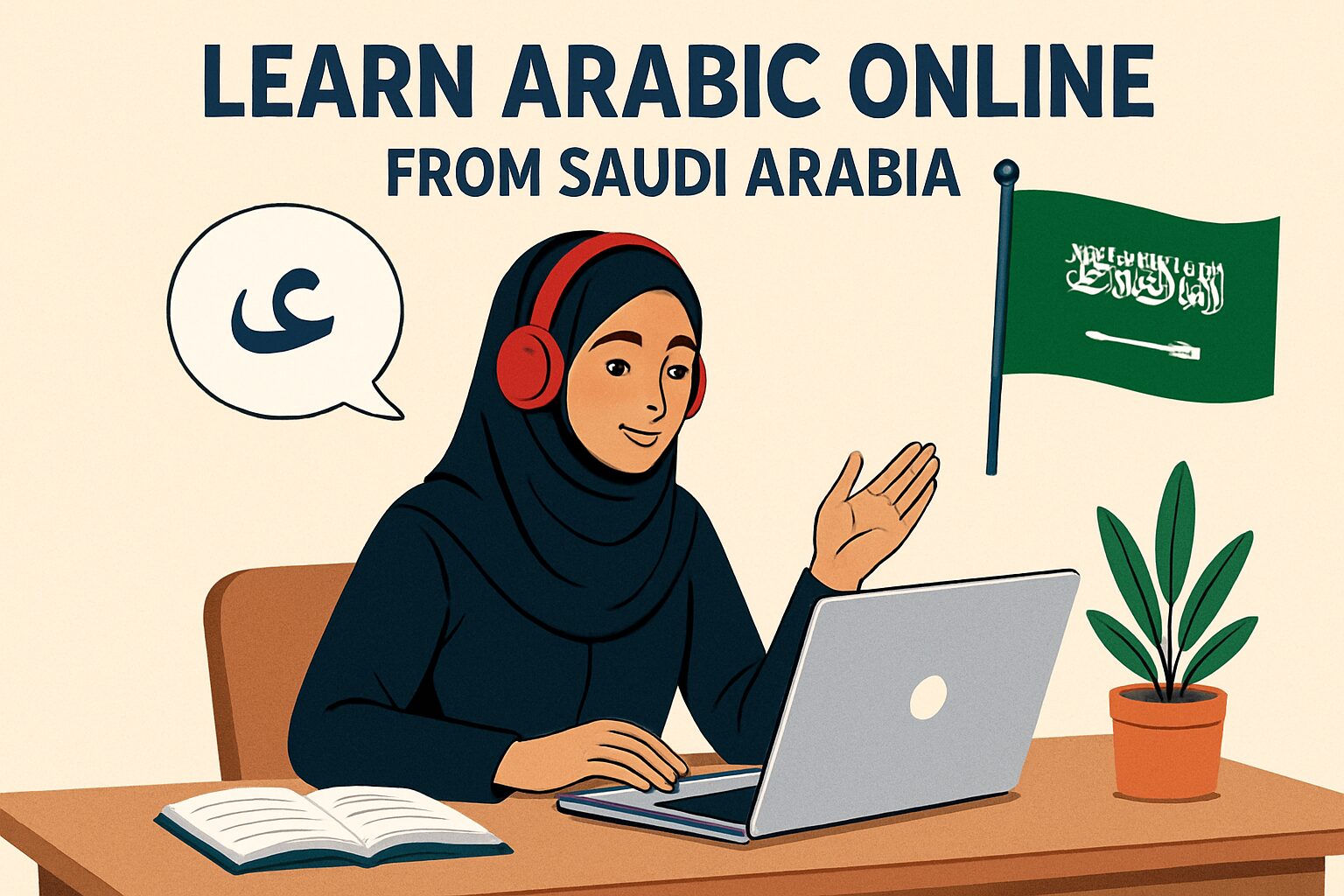
Whether you’re living in Riyadh, working in Doha, studying in Canada, or connecting to the Arab world from anywhere on the planet — you can learn Arabic online from Saudi Arabia right now, with native teachers, a structured curriculum, and real results. You don’t need to be physically present in the Kingdom. You need a qualified teacher, a consistent plan, and the right strategies.
This guide combines everything: how to start as a beginner, which methods work for Gulf learners specifically, how Egypt-based teachers give you the strongest Arabic foundation, and what learners in Saudi Arabia, Qatar, Canada, and beyond are doing differently to reach fluency faster.
Who Is This Guide For?
Before diving in, let’s be honest about fit.
This is for you if:
- You’re living in Saudi Arabia (expat or national) and want to study Arabic seriously online
- You’re in Qatar, Canada, or anywhere globally and want access to authentic Gulf and Egyptian Arabic instruction
- You’re a complete beginner who needs a clear starting path
- You want Quranic Arabic, MSA, or conversational Gulf dialect — or a combination of all three
- You’ve tried apps and YouTube but need real structure and a qualified teacher
This is NOT for you if:
- You expect to reach conversational level in 4 weeks with no daily practice
- You only want free resources with zero human interaction
- You’re looking for a Saudi-based teacher specifically (Alphabet Arabic Academy’s teachers are Egyptian — Al-Azhar certified — which we’ll explain below is actually an advantage for most learners)
Why Learn Arabic Online from Saudi Arabia? The Real Case
Saudi Arabia sits at the heart of the Arabic-speaking world. It’s home to Mecca and Medina, the two holiest sites in Islam. It’s where Classical Arabic — the language of the Quran — was preserved in its purest form. It hosts millions of expats from across the globe. And its Gulf Arabic dialect is understood from Kuwait to the UAE to Oman.
So why do people search for “learn Arabic online from Saudi Arabia” specifically?
Religious motivation. Millions of Muslims worldwide want to understand the Quran and Islamic texts more deeply. Saudi Arabia’s connection to Islamic scholarship makes Arabic learning feel more purposeful and grounded for faith-focused learners.
Professional motivation. Saudi Arabia’s Vision 2030 has accelerated international business investment in the Kingdom. Engineers, doctors, consultants, and business professionals working in or with Saudi companies need functional Arabic — and they need it without leaving their jobs or relocating.
Expat community motivation. Over 12 million expats live and work in Saudi Arabia. Many want to integrate, build local relationships, and understand the culture they’re immersed in daily.
Regional communication. Gulf Arabic is understood across the Arabian Peninsula. Learning Arabic in a Saudi context gives you communication range across Bahrain, Kuwait, Qatar, the UAE, and Oman simultaneously.
Here’s the thing, though: the best Arabic instruction for Saudi-based learners often comes from Egypt — not from Saudi Arabia itself. And that’s not a compromise. It’s a strategic advantage.
Why Egyptian Teachers Are the Best Choice for Gulf Learners
This might surprise you. Egypt isn’t in the Gulf. So why do Alphabet Arabic Academy’s Egyptian teachers — Al-Azhar University graduates — serve Saudi Arabia-based learners so effectively?
Several reasons.
MSA quality. Modern Standard Arabic is the formal written and broadcast language used across the entire Arab world — including Saudi Arabia. Egypt’s academic institutions, particularly Al-Azhar, have been the global centre of Arabic linguistic scholarship for over a thousand years. Egyptian Arabic teachers produce some of the clearest MSA instruction available anywhere.
Egyptian dialect transfer. Egyptian Arabic is the most widely understood dialect in the Arab world, partly because of Egypt’s dominance in film, television, and music. A Saudi learner who gains competence in MSA and Egyptian Arabic can communicate effectively with virtually any Arabic speaker on earth — including Gulf speakers.
Teaching experience with non-native learners. Egyptian teachers at Alphabet Arabic Academy have specifically trained to teach Arabic to non-native speakers. That’s a distinct skill from being a native speaker. They know where English, French, and Urdu speakers struggle, and they’ve developed methods to address those specific gaps.
Availability and flexibility. Cairo is GMT+3, which aligns well with Saudi Arabia (GMT+3), Qatar (GMT+3), and works easily for Canadian learners in any time zone too. Sessions can be booked 24/7.
Browse our certified teaching team — every instructor holds a university degree in Arabic or Islamic studies and has years of experience teaching non-native speakers.
Strategy 1: Start with the Right Foundation — Not the Fastest Path
The biggest mistake Saudi Arabia-based learners make is skipping the foundation to rush into dialect. You want to speak Gulf Arabic on day one. Understandable. But learners who start with MSA and alphabet first — then add Gulf dialect — progress twice as fast as those who try dialect first with no grammar base.
Here’s why.
Gulf Arabic shares its grammatical DNA with Modern Standard Arabic. Once you understand how Arabic verbs work, how nouns change form, how sentences are structured — picking up Gulf vocabulary and pronunciation is a matter of weeks, not months. Without that foundation, you’re memorising disconnected phrases that don’t stick and don’t transfer.
Step 1: Master the Alphabet in 3–4 Weeks
Arabic script is not optional. Don’t learn through transliteration (writing Arabic words in English letters). It feels faster at first, then hits a wall.
With 30 minutes daily focus, you’ll read and write the full Arabic alphabet in 3–4 weeks. That’s 28 letters, each with up to 4 forms depending on position in a word. It’s a finite task — not an endless one. Take the free Arabic level test to confirm you’re genuinely at zero before spending time on skills you already have.
Step 2: Build MSA Grammar for 3–6 Months
MSA is your engine. Present tense verbs, basic noun patterns, sentence structure, the dual form, broken plurals. These don’t have shortcuts. But they compound beautifully — each concept you master makes the next one faster to grasp.
Two sessions per week with a qualified teacher, plus 20 minutes daily self-study, produces visible progress within a month.
Step 3: Layer Gulf Dialect on Top
Once you have MSA foundations — typically 3–6 months in — adding Gulf Arabic (Khaleeji) dialect becomes dramatically faster. The vocabulary shift, pronunciation differences, and colloquial expressions all have MSA equivalents your brain already knows.
This layered approach is exactly how the most successful Saudi-based learners at Alphabet Arabic Academy reach conversational ability within 12 months.
Strategy 2: Understand the Saudi/Gulf Arabic Dialect Landscape
Gulf Arabic — Khaleeji — is spoken across Saudi Arabia, Qatar, Bahrain, Kuwait, the UAE, and Oman. It’s distinct from Egyptian Arabic, Levantine Arabic, and Moroccan Arabic in vocabulary, pronunciation, and some grammatical patterns.
Key Features of Saudi/Gulf Arabic
Pronunciation shifts. The letter ق (qaf) is often pronounced as a “g” sound in Gulf Arabic, unlike MSA. The letter ج (jeem) often sounds like a “y” in Gulf dialects. These are patterns, not random exceptions — once you know them, they’re easy to apply.
Vocabulary differences. Gulf Arabic borrows significantly from Persian, English (especially in professional contexts), and tribal Arabic. Some everyday words have no direct MSA equivalent. Examples: “شلونك؟” (Shloonak — how are you?) in Gulf dialect vs. “كيف حالك؟” (Kayfa halak) in MSA.
Code-switching. In formal and professional settings — media, government, business presentations — Saudis use Modern Standard Arabic. In everyday conversations, Gulf dialect. In religious contexts, Classical Arabic. Learners who understand only one register are functionally limited. The best approach: MSA as your foundation, Gulf dialect as your conversational layer.
Qatar: A Special Case
Learning Arabic in Qatar online follows the same Gulf Arabic patterns with some Qatari-specific vocabulary and cultural context. Qatar’s rapid economic growth has brought English as the dominant business language, but Arabic proficiency is a genuine career advantage — particularly in government-adjacent sectors, healthcare, and education. Qatari Arabic is closely related to Saudi Arabic and mutually intelligible across the Gulf.
For Gulf dialect depth alongside MSA foundations, see our 10 ways to learn Gulf Arabic.
Strategy 3: Egypt as Your Learning Gateway — The Egypt-Online Model
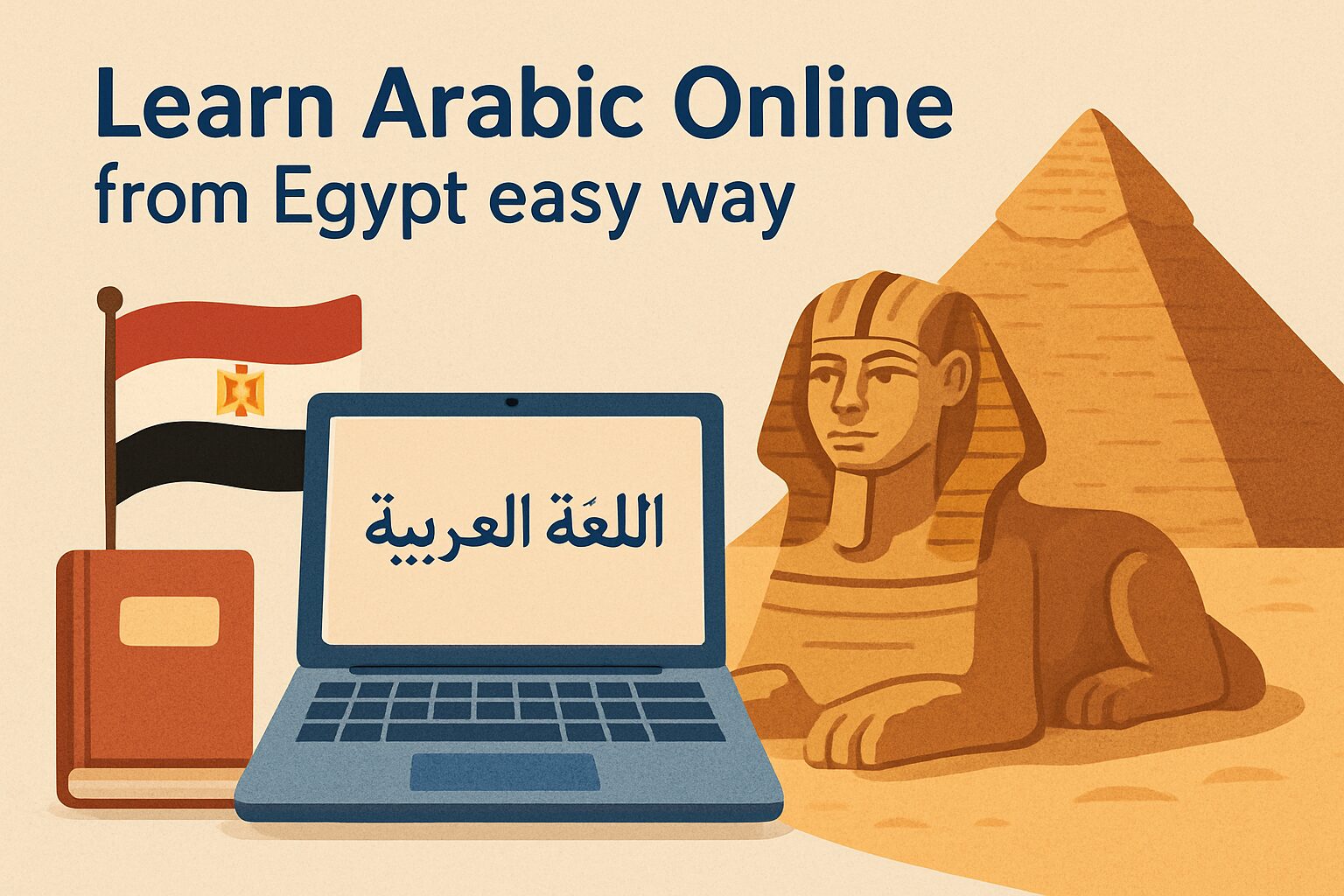
Here’s something that often surprises learners in Saudi Arabia and beyond: the fastest path to Arabic proficiency — regardless of where you live — often goes through Egypt.
Not because of geography. Because of learning infrastructure.
Egypt has produced the world’s most widely used Arabic textbooks, the most accessible Arabic media (films, TV, music), and some of the most experienced Arabic-as-a-foreign-language teachers anywhere. Al-Azhar University in Cairo has been the world’s leading centre of Arabic Islamic scholarship for over a millennium. When you learn Arabic from Egypt through Alphabet Arabic Academy, you’re connecting to that tradition — delivered via Zoom, at a time that fits your schedule.
What Egypt-Based Online Learning Gives Saudi Learners
MSA precision. Egyptian teachers trained at Al-Azhar teach with a grammatical rigour that builds transferable language skills — not just rote phrases.
Cultural depth. Understanding Arabic culture through Egypt’s lens — its literature, media, history, and Islamic scholarship — gives you a richer understanding of the entire Arab world than any single-dialect programme can.
Dialect comprehension bonus. When you learn Egyptian Arabic alongside MSA, you gain comprehension of Arabic media that Saudi learners find genuinely useful. Egyptian films and TV series dominate Arab entertainment. Understanding them builds your ear for natural Arabic speech patterns that transfer to Gulf contexts.
Affordable, accessible, flexible. Lessons starting from $40/month, 24/7 scheduling, no travel costs, no relocation required. A Saudi learner in Jeddah and a Canadian learner in Toronto are accessing the exact same teacher quality.
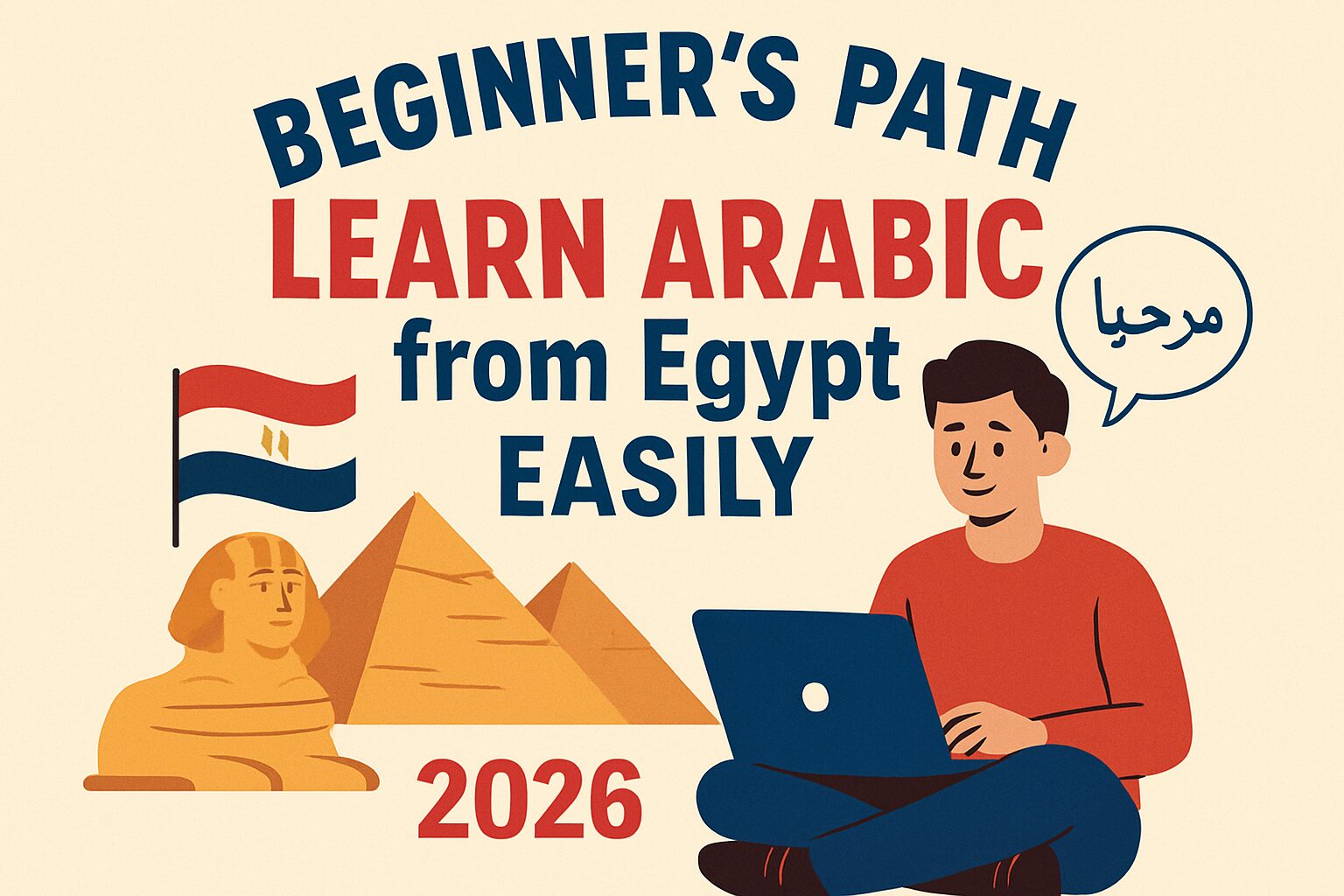
For a full beginner path using Egypt-based learning, the Beginner’s Path: Learn Arabic from Egypt in 2026 guide covers the complete roadmap.
Strategy 4: Learning Arabic Online from Canada — What’s Different

Canadian learners searching for Arabic instruction face different constraints than Gulf-based learners. The challenges aren’t about motivation — they’re about access, time zones, and community.
The Canadian Arabic Learning Context
Canada has large and growing Arabic-speaking communities in Toronto, Montreal, Ottawa, and Vancouver. Many Canadian Arabic learners are:
- Children of Arab immigrants wanting to reconnect with heritage language
- Muslim Canadians seeking Quranic Arabic and Islamic studies
- Professionals in diplomacy, healthcare, or international development needing functional MSA
- Students adding Arabic for academic or career purposes
The timezone advantage. For Canadian learners, Cairo is 7–8 hours ahead (depending on daylight saving). That means early morning Egypt time (6–8am Cairo) is late evening in Eastern Canada, and midday Cairo sessions align with early morning Pacific time. This actually works well for Canadian learners who prefer evening study after work.
The community immersion advantage. Canada’s Arabic-speaking communities mean that classroom learning can be reinforced through real-world community interaction — mosques, cultural events, Arab grocery conversations — in a way that’s simply not available to isolated self-studiers elsewhere.
Proven strategies that work for Canadian learners:
Combine 2 live sessions per week with Alphabet Arabic Academy teachers (evening Canadian time, morning Cairo time) with daily vocabulary practice on Anki. Supplement with Arabic media — Egyptian films on YouTube, Al Jazeera Arabic podcasts. Add one language exchange session weekly with a native speaker from the Canadian Arab community. This combination — roughly 45 minutes daily total — consistently produces A2-level conversational ability within 8–10 months.
Strategy 5: Goal-Setting That Actually Produces Results

Here’s the honest truth about Arabic learning goals: most learners set them too vaguely, then abandon them too quickly.
“I want to learn Arabic” is not a goal. It’s a wish.
SMART Arabic Goals for Saudi/Gulf Learners
Bad: “I want to understand the Quran.” Good: “I want to understand the core vocabulary of Surah Al-Baqarah with 70% comprehension within 18 months.”
Bad: “I want to speak Gulf Arabic.” Good: “I want to hold a 10-minute work conversation in Arabic without switching to English within 9 months.”
Bad: “I want to improve my Arabic.” Good: “I want to pass an A2 assessment within 6 months of consistent study.”
Set one major 12–18 month goal. Break it into monthly milestones. Review monthly — what improved? What didn’t? Adjust.
Daily Minimums for Consistent Progress
Language learning doesn’t respond to intensity as much as frequency. 20 minutes daily beats 3 hours once a week. Every time.
Survival day: 10 minutes. Anki flashcard reviews only. Non-negotiable.
Standard day: 25–30 minutes. 10 minutes vocabulary, 15 minutes reading or lesson review, 5 minutes writing three sentences.
Good day: 45–60 minutes. Full lesson unit, listening to Arabic news or podcast, speaking practice or language exchange.
For Saudi-based learners, Fajr study time (early morning) works particularly well. It’s quiet, the mind is fresh, and 20–30 minutes before starting the day compounds powerfully across months.
Strategy 6: Build Real Speaking Ability — Not Just Comprehension
This is where most self-paced Arabic learners plateau. They can read reasonably well. They can understand spoken Arabic at slow speed. But they freeze when it’s time to produce the language themselves.
Speaking is a separate skill. It needs separate practice.
How to Build Speaking from Day One
Start speaking in week one, even badly. Introduce yourself. Describe your day. Name objects around you. The errors don’t matter. What matters is getting your mouth moving in Arabic from the start, before the habit of silence in the language sets in.
Shadow native speakers. Pick a short audio clip — 30 seconds of an Egyptian teacher explaining something, or a Gulf Arabic dialogue. Listen. Repeat immediately, mimicking the rhythm and pronunciation as closely as possible. Not for meaning at first — for sound. This builds the muscle memory of Arabic phonetics faster than any grammar drill.
Record yourself weekly. 60 seconds, describing something simple in Arabic. Listen back. You’ll hear errors you’d never catch in your head. Send to your teacher monthly for feedback.
Language exchange with native speakers. Tandem and HelloTalk connect you with native Arabic speakers learning English. 30 minutes in Arabic, 30 in English. Free, real practice. In Saudi Arabia, local Arabic-speaking colleagues and community members are also natural exchange partners.
One-on-one teacher sessions. Nothing replaces a qualified teacher hearing your pronunciation in real time and correcting it before it fossilises into a permanent error pattern.
For audio-based learning approaches that build speaking skills systematically, see Learn Arabic Audio Fast and Simple.
Strategy 7: Resources That Actually Work for Gulf Learners

There’s no shortage of Arabic learning resources. The problem is picking the right ones and not drowning in options.
Primary Resources (Use One, Stick with It)
Al-Arabiya Bayna Yadayk (Arabic Between Your Hands): The textbook used by Alphabet Arabic Academy. Comprehensive, internationally recognised, specifically designed for non-native Arabic speakers. If you’re studying with an Alphabet Arabic Academy teacher, this is your core curriculum.
Al-Kitaab: Another widely respected MSA textbook series. Good alternative if your programme uses it.
The rule: pick ONE primary textbook. Use it for a minimum of 3 months before evaluating. Switching textbooks mid-stream is the most common way to waste learning time.
Daily Supplementary Tools
Anki: Free flashcard app with spaced repetition. 10–15 minutes daily for vocabulary. The most efficient vocabulary building tool available for any language.
ArabicPod101: Podcast-style audio lessons at every level. Excellent for commutes. Gulf-specific content available. Download episodes for offline listening.
YouTube — Arabic drama and media: Egyptian drama for natural speech patterns. Al Jazeera Arabic for formal MSA exposure. Saudi channels for Gulf dialect immersion.
Madinah Arabic (free online): Particularly useful for learners focused on Quranic and Classical Arabic. Strong grammar foundation using Saudi-developed materials.
Quranic Arabic Resources Specifically
For Saudi learners motivated by Islamic study, Quranic Arabic deserves dedicated resources:
- Bayyinah TV (Nouman Ali Khan): English-language Quran and Arabic explanation. Excellent for connecting language learning to Quranic understanding.
- Madinah Arabic series: Developed at the Islamic University of Madinah. Strong grammar with classical Arabic examples.
- Alphabet Arabic Academy’s Quran and Tajweed courses: Live sessions with Ijazah-certified teachers. Structured Tajweed and Quran memorisation (Hifz) programmes available.
Strategy 8: Immersion Without Moving — Cultural Learning Online
Full immersion — living in Saudi Arabia, speaking Arabic all day — is the fastest way to achieve fluency. But most learners don’t have that option. The good news: partial immersion, built deliberately into daily life, produces significant acceleration even without relocation.
Build Your Arabic Environment
Change your phone language to Arabic. Uncomfortable at first. Quickly teaches you the most common functional vocabulary faster than any flashcard deck.
Follow Arabic social media accounts. Arabic news outlets, Saudi lifestyle accounts, Islamic scholars posting in Arabic. Even passive exposure builds vocabulary recognition over time.
Watch Arabic films and shows with Arabic subtitles. Not English subtitles — Arabic. Forces you to connect written and spoken Arabic simultaneously. Start with Egyptian films (clearest pronunciation, widest vocabulary match) and work toward Gulf Arabic content.
Listen to Saudi radio or podcasts during commute. BBC Arabic, Al Arabiya, Sputnik Arabic — all broadcast in clear Modern Standard Arabic. Saudi cultural podcasts are increasingly available on Spotify.
Label household objects in Arabic. Old technique, still effective. Your kitchen becomes an Arabic vocabulary list.
Virtual Cultural Connection
Online Arabic learning in 2025 includes cultural immersion features that weren’t possible a decade ago. Alphabet Arabic Academy teachers don’t just teach grammar — they explain cultural context, share stories, and bring the lived experience of Arabic into each session.
This cultural depth is particularly important for Saudi learners who want to understand Arabic as a living cultural system, not just a grammatical structure.
Strategy 9: Building Accountability Systems That Hold
Self-directed Arabic learning has one unavoidable weakness: nobody’s making you show up.
90%+ of learners who try Arabic through apps alone quit within three months. Not because Arabic is too hard — because self-discipline without external structure is genuinely difficult to maintain over 12–18 months.
Here are the accountability systems that work for long-term Arabic learners.
Weekly teacher sessions. The most powerful accountability tool available. You have a teacher who expects to see you, and who will ask what you practised since last session. Even one session per week is enough to prevent the “I’ll start again next week” spiral.
Track your streak visibly. A simple calendar with an X for each day you studied is surprisingly powerful. Maintaining a 30-day streak feels genuinely motivating. Breaking it feels genuinely disappointing — in a useful way.
Find a study partner. Another Arabic learner at a similar level. Weekly check-in, shared progress. You don’t want to arrive at check-in with nothing to report.
Public commitment. Tell people you’re learning Arabic. Post about it. The mild social accountability of stated intention is real.
Set a meaningful deadline. A planned trip to Saudi Arabia. A business meeting where you want to open in Arabic. A Quran completion milestone. Deadlines with personal meaning create urgency that abstract goals don’t.
Strategy 10: Join Online Arabic Learning Communities
Language learning alone is slower and harder than learning with others. Online Arabic communities provide motivation, resources, peer correction, and the powerful experience of watching other learners progress — which makes your own progress feel real and achievable.
Where to find Arabic learning communities:
Reddit’s r/learn_arabic has 150,000+ members. Questions get answered. Resources get shared. Encouragement is genuine.
Discord servers dedicated to Arabic learners include moderated spaces for practice, vocabulary challenges, and grammar questions.
Alphabet Arabic Academy’s own student community connects learners from 80+ countries — including substantial Saudi, Gulf, and Canadian communities — for mutual support and language exchange.
Facebook groups for Arabic learners in specific countries (Saudi Arabia-specific expat Arabic learner groups are active and welcoming).
What to actually do in these communities:
Post your own questions. Answer questions from learners at earlier stages than you — teaching reinforces learning powerfully. Share resources you find genuinely useful. Celebrate milestones (first paragraph read, first conversation held, first Quran surah understood). The community makes the long timeline of Arabic learning feel less solitary.
Common Mistakes Saudi Arabia and Gulf Arabic Learners Make
Image suggestion: List of common mistakes shown as a friendly illustrated checklist Alt text: Arabic learning mistakes Gulf Saudi learners avoid common errors
These errors are predictable. Knowing them in advance puts you ahead.
Mistake 1: Starting with Gulf dialect before MSA foundations. The temptation is to learn “useful” Saudi/Gulf phrases immediately. But without MSA grammar, your learning will plateau early and the phrases won’t stick. Build the foundation first.
Mistake 2: Treating Quranic Arabic as the same as spoken Arabic. Classical Quranic Arabic has grammatical features that don’t appear in modern conversation. Learners who study only Quranic Arabic often struggle with everyday MSA and vice versa. Treat them as related but distinct goals.
Mistake 3: Switching resources every few weeks. You try Al-Kitaab for two weeks, then switch to Duolingo, then buy a Gulf Arabic phrasebook, then watch YouTube for a month. No single resource gets enough time to actually teach you. Choose one primary programme. Commit to it for three months minimum.
Mistake 4: Studying only input, never output. Reading, listening, watching Arabic media — all valuable. But none of them build speaking ability. You have to speak, write, and produce the language to develop production skills. Force yourself to write three sentences in Arabic daily, even on bad days.
Mistake 5: Letting perfect be the enemy of consistent. Cancelled the session this week? Fell off the streak? Forgot your Anki reviews for four days? The correct response is: resume tomorrow. Not restart from scratch. Not wait until next month. Tomorrow.
Let me tell you about Fahad.He’s a Saudi engineer working in Dammam. He’d been living in Saudi his whole life, speaking Arabic at a basic level with family and colleagues. But formal Arabic? Professional Arabic for his engineering reports? MSA for reading contracts? He struggled. He’d get lost in meetings when people switched to formal Arabic.He tried local tutors first. Expensive. Scheduling was hard. One tutor was great at Gulf dialect but weak on MSA grammar. Another knew MSA but didn’t understand his engineering vocabulary needs.Then he found us. Online. With an Egyptian Al-Azhar-trained teacher who specialises in professional Arabic.We placed him at A2 (he knew more than he thought). Nine months of consistent sessions — two per week, early morning before work.Today? Fahad writes his own engineering reports in Arabic. He reads contracts without needing translation. His manager noticed. He got promoted.Fahad’s advice to other Saudi learners: “Don’t skip the MSA foundation. I know you want to speak Gulf dialect. I did too. But the grammar from MSA made everything else faster. Way faster.”From struggling with formal Arabic to writing professional reports. That’s what the right system — and the right teacher — can do.
Frequently Asked Questions
Q1: I’m in Saudi Arabia and I already speak some Arabic at a basic level. Should I start with MSA or go straight to Gulf dialect improvement?
Get a proper level assessment first — your gut sense of your level is often inaccurate. Take the free Arabic level test to find your actual starting point. If you have genuine MSA foundations (A2 level or above), you can work on Gulf dialect in parallel with your teacher. If you’re actually A1 with some survival phrases, MSA grammar work first will produce better results faster.
Q2: I’m an expat in Qatar learning Arabic for professional reasons. What’s the fastest realistic path to workplace Arabic?
For functional workplace Arabic in Qatar’s context, 9–12 months of focused study is realistic: 2 sessions/week with a qualified teacher, 20 minutes daily vocabulary work, and deliberate practice using Arabic in low-stakes workplace situations (greetings, simple requests, basic meetings). Focus on professional Arabic vocabulary alongside Gulf dialect conversational patterns. Professional Arabic course options are available at Alphabet Arabic Academy’s pricing page — the professional track specifically addresses business vocabulary and formal written Arabic.
Q3: I’m in Canada and want to learn Arabic to connect with my heritage and understand the Quran. Which is better — MSA or Egyptian Arabic first?
For Quranic understanding, MSA is the essential foundation — Classical Arabic and MSA share the same grammatical structure. Start with MSA, which will build your Quranic comprehension, then add Egyptian Arabic if you also want conversational ability with the Egyptian community in Canada. The combination is more achievable than it sounds: MSA grammar is the same system. Egyptian dialect adds vocabulary and pronunciation patterns on top, not a whole new language from scratch.
Q4: How do Egyptian teachers at Alphabet Arabic Academy help Saudi-based learners specifically? Shouldn’t I learn from a Saudi teacher?
Egyptian Al-Azhar teachers teach the best Modern Standard Arabic and Quranic Arabic in the world — this is Egypt’s academic heritage, not an arbitrary claim. For learners who want to read, write, and understand formal Arabic across the Arab world (including Saudi media and professional contexts), Egyptian MSA instruction is the gold standard. Gulf dialect vocabulary and pronunciation can be integrated into sessions — your teacher will address Saudi-specific language patterns directly. The teaching skill, curriculum quality, and availability outweigh any advantage of a locally-based teacher. For Gulf dialect depth specifically, see our colloquial Egyptian Arabic course alongside MSA study.
Q5: What’s a realistic monthly budget and timeline for reaching conversational Arabic from Saudi Arabia?
Budget: $80/month (2 sessions/week) with daily self-study using free supplementary tools. For intensive progress: $114/month (3 sessions/week).
Timeline: At 2 sessions/week plus 20 minutes daily self-study — basic conversational ability emerges around month 9–12. Intermediate proficiency (reading news, understanding formal broadcasts, professional basic conversations) typically takes 18–24 months. Quranic comprehension at 60–70% level takes 18–24 months of dedicated study. Consistent practice over a sustained period is the only variable that changes these timelines. There are no shortcuts — but there are smarter paths, and this guide has mapped them.
Conclusion
Learning Arabic online from Saudi Arabia — or from Qatar, Canada, Egypt, or anywhere else — comes down to three things: the right strategy, a qualified teacher, and consistent daily practice over months, not weeks.
The strategies in this guide reflect what actually works for Gulf learners: MSA foundations before dialect layering, Egypt-trained teachers for the strongest academic grounding, daily minimums that fit real life, and accountability systems that keep you going when motivation fades.
Arabic is one of the most rewarding languages you can learn. It opens the Quran. It opens conversations across 22 countries. It opens career doors in one of the most economically dynamic regions on earth. And with online learning, the distance between you and a qualified Al-Azhar teacher is exactly zero.
Ready to know your real starting level? Take the free Arabic level test — it takes 15 minutes and gives you a clear, honest picture.
Ready to start? See all available courses and book your free trial at Alphabet Arabic Academy pricing. First lesson is free. No credit card required. No commitment until you’ve tried.
بسم الله — In the name of Allah.